


BelongAI Dave - Cancer Mentor
4.433.00 Reviews
App Specs
- Version
- 2.8.6
- Updated On
- License
- Free
- Downloads
- 10,000+
- Developer
- BelongTail
- Categories
- Medical
- Platform
- Android
Screenshots
 Analysis by AppCompare
Living with cancer often means dealing with a stream of questions between appointments: what a medical term means, how to prepare for a conversation with an oncologist, or how to organize information when everything feels overwhelming. BelongAI Dave - Cancer Mentor approaches that problem as a medical support app built around an AI cancer mentor. I found its most meaningful capability to be the way it gives patients a place to turn everyday uncertainty into clearer, more organized questions.
That sounds modest, but it can make a real difference. An AI assistant cannot replace a cancer specialist, diagnose a condition, or decide on treatment. What it can do is help someone prepare, understand general information, and feel less lost before speaking with a healthcare professional. The useful part is not treating the app as a doctor; it is using it as a preparation and orientation tool.
Developed by BelongTail, this free medical app is aimed at teenagers and older users, with an age rating of Teen. It is available for devices running Android 8.0 or later, and its current version is 2.8.6. The app has reached over 10 thousand installs and holds a 4.4 average from around 81 ratings, which suggests that it has attracted a small but generally positive audience.
Turning cancer questions into a more manageable conversation
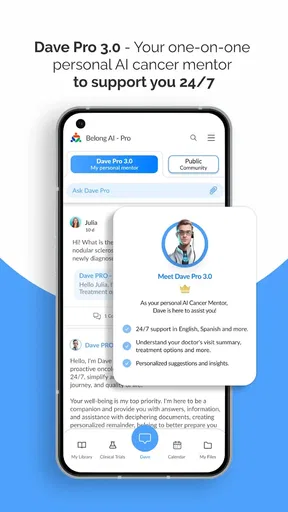
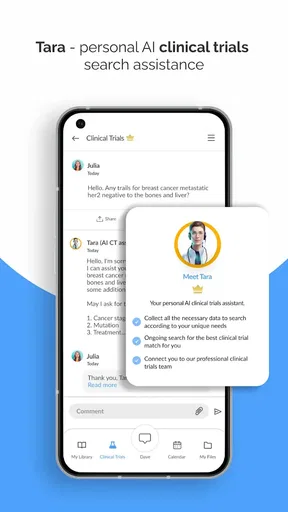
The central idea behind BelongAI Dave is proactive support. Instead of waiting until the next appointment to remember every concern, I can use the app to explore a question while it is fresh and then turn that exploration into something more useful for a clinical conversation. That shift matters because patients frequently have information scattered across messages, printed notes, search results, and memory.
In practice, I would use the mentor for questions such as asking for a plain-language explanation of a medical expression, identifying topics worth raising with a care team, or thinking through what information may be relevant before an appointment. The value comes from reducing the distance between “I do not understand this” and “I know what I want to ask next.”
That is different from opening a general search engine. Search results can be technically accurate yet difficult to interpret, and they often lead to alarming possibilities that do not apply to the individual situation. A conversational cancer-focused tool is more useful when the goal is to frame a question rather than collect a large pile of disconnected pages.
Still, I would keep the app in a supporting role. Cancer care depends on details such as diagnosis, pathology, stage, treatment history, other medicines, and personal health circumstances. A general AI response cannot safely account for all of those factors. I would never use a reply from Dave as a reason to start, stop, or change treatment, and I would not treat it as an emergency service.
Worth Reading Before You Choose

Flipboard Shows What News Apps Must Do Beyond the Feed

Switching to Android Auto Means Rethinking Your Driving Routine

Google Calendar Makes a Crowded Week Easier to Manage

Ludo King Makes the Most of the Minutes Between Plans

Baby Panda World Brings Quick Play to Modern Phones, but Its Game Library Feels Busy

ESPN’s Live Game View Makes Following Close Games Easier
How I would use the mentor without overtrusting it
The best workflow is simple but deliberate. First, I would write the question in ordinary language instead of trying to sound medical. Then I would read the answer slowly, marking the parts that are unclear or that seem especially relevant to my situation. Finally, I would turn those points into a short list for a doctor, nurse, pharmacist, or cancer support professional.
This three-step approach is more valuable than asking endless questions without recording anything. It prevents the app from becoming a source of passive reading and makes it part of an actual care conversation. For example, if I were unsure about a term in a report, I would use the explanation to identify the exact phrase I want a clinician to clarify, rather than assuming the AI’s interpretation settles the matter.
A second useful habit is separating general education from personal advice. I would ask the app to explain a concept, compare broad categories, or help me prepare questions. I would be much more cautious with prompts that ask what a specific person “should” do. The more personal the decision, the more important it becomes to take the answer to the treating team instead of acting on it.
I would also avoid entering unnecessary identifying information. A patient can often describe a concern in general terms while leaving out names, contact details, record numbers, and other information that is not needed for understanding the question. That makes the interaction more focused and is a sensible habit for any health-related digital tool.
One non-obvious strength of this kind of workflow is that it can help family members communicate more constructively. A relative may use the mentor to understand a term before asking the patient about it, or to prepare supportive questions for an appointment. The important boundary is consent and respect: the app should not become a way for someone else to interpret or manage a patient’s care without involving that patient and the clinical team.
A realistic appointment-day example
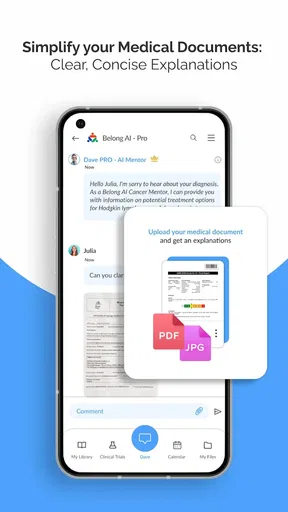
Imagine receiving a treatment-related document the evening before an appointment. I might understand some words but feel uncertain about others, and in the moment I may not know which questions matter most. I could use BelongAI Dave to turn the unfamiliar wording into a short preparation list: which terms need clarification, what practical concerns I want to mention, and which questions belong specifically to the oncologist or pharmacist.
The next morning, I would bring that list to the appointment. If the clinician gives an answer that differs from the general explanation, the clinician’s advice would take priority because it is based on the complete medical picture. In that scenario, the app has still done its job. It has not made the decision; it has helped me arrive better prepared and less likely to forget an important question.
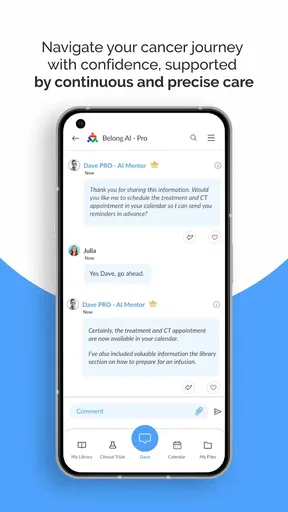
The same approach can help after an appointment. Rather than trying to remember everything, I could use the mentor to identify which parts of the discussion I should review with a professional. This is especially useful when stress makes it difficult to process information in real time. The app becomes a bridge between appointments, not a substitute for them.
Where it is more helpful than ordinary searching
General web searches remain useful when I need an official guideline, a hospital’s patient instructions, or a source that I can read in full. They are less comfortable when I do not know the right medical vocabulary. BelongAI Dave’s focused conversational format is better suited to the early stage of a question, when I need help expressing what I am confused about.
It also has an advantage over a generic chatbot because its purpose is centered on cancer support rather than every possible subject. That focus can make the interaction feel more relevant. However, specialization does not automatically make every answer correct for every patient. I would still compare important information with trusted clinical sources and ask my care team to interpret anything that could affect a decision.
Compared with a patient forum, the app may be more efficient for explaining terminology and shaping questions. Forums can offer emotional reassurance and personal experiences, but another patient’s story is not a medical forecast. I would use community discussions for human connection and Dave for structured preparation, while keeping treatment decisions with qualified professionals.
Compared with a symptom checker, the mentor’s role feels broader and less narrowly focused on producing a possible explanation for a symptom. That can be an advantage when the real need is education or appointment preparation. It is also a reason not to use it for urgent symptoms. A person who may need immediate medical attention should contact local emergency services or an appropriate healthcare provider rather than waiting for an AI conversation.
The trade-offs behind an AI cancer mentor
The biggest trade-off is convenience versus clinical certainty. A quick answer can reduce confusion, but it may also sound more confident than the underlying situation deserves. I pay attention to whether a response is general or personal, and I treat any recommendation involving medication, tests, treatment, or urgent symptoms as a prompt to contact a professional, not as an instruction.
Another limitation is that the quality of the conversation depends on the quality of the question. If I leave out important context, the response may be too broad. If I include too much detail in one long message, the main concern can get buried. Short, focused prompts work better: one term, one preparation concern, or one clearly defined topic at a time.
There is also a human limitation. Some people do not need more information; they need a person who can listen, reassure them, or explain what is happening in the context of their own life. An AI mentor can be available for questions, but it cannot replace the relationship with an oncology team, a counselor, a support group, or a trusted family member.
The app is free to download, which lowers the barrier for someone who wants to try its basic experience. It also includes optional in-app purchases ranging from 49 cents to 179 dollars and 99 cents per item. That makes it important to pay attention to any purchase prompt and decide in advance whether paid access fits the user’s needs. For a health app, cost should not be an afterthought, especially when someone may already be managing expensive care.
Because the app is rated Teen, younger users and families should still think about how it will be used. Cancer information can be emotionally heavy, and a teenager may need an adult or healthcare professional to help interpret difficult topics. The age rating does not remove the need for guidance when the subject is frightening or personally relevant.
Small habits that make the app more useful
I would keep a separate appointment note while using the app. After each useful exchange, I would save only the question or topic I want to discuss with a professional, not assume that the entire AI answer belongs in my medical record. This keeps the note practical and avoids confusing an educational explanation with documented clinical advice.
I would also ask for clarification rather than immediately asking a second, more complicated question. If a term is unfamiliar, first request a plain-language explanation. Then ask what part of that explanation would be reasonable to discuss with a doctor. This creates a clearer chain from understanding to action and reduces the chance of jumping to a conclusion.
A third tip is to use the app before a scheduled conversation, not during a stressful decision. Preparation gives me time to check the wording, identify what I do not understand, and decide who should answer it. Using an AI tool at the moment of panic can encourage rushed interpretation, which is exactly when professional help matters most.
For caregivers, I would recommend writing questions from the patient’s perspective and checking whether the patient actually wants that information discussed. The app can help organize support, but it should not take control away from the person receiving care. That distinction is easy to miss and important to maintain.
Who is likely to gain the most
BelongAI Dave is a good fit for someone who wants a cancer-focused place to begin learning and preparing, especially if medical language feels intimidating. It may also help a newly involved caregiver who needs to understand basic concepts before having a more informed conversation with the care team. People who prefer typing questions privately may find that less stressful than searching through broad medical websites.
It is less suitable for anyone looking for a diagnosis, a personalized treatment plan, or a replacement for an oncology appointment. It is also not the right first choice for urgent symptoms, severe side effects, or a crisis. In those situations, a healthcare provider, emergency service, or established clinical contact is the better option.
Users who already have a strong relationship with their care team and reliable official patient materials may not need the app for every question. For them, its best use may be occasional preparation when a report, appointment, or unfamiliar term creates uncertainty. That is a narrower role, but it is still a practical one.
From my perspective, the app’s strongest contribution is helping a patient move from vague worry to a specific conversation. Its 4.4 average and growing install base make it worth considering, but numbers alone should not decide whether a medical tool belongs in someone’s routine. The real test is whether it helps the user ask better questions without encouraging false confidence.
My recommendation is to use BelongAI Dave as a careful cancer education and appointment-preparation companion. I would download it for that purpose, keep personal details to a minimum, watch the in-app purchase prompts, and verify consequential information with qualified healthcare professionals. Used within those boundaries, it can make difficult information feel more approachable. Used as a doctor substitute, it is the wrong tool.
That balance is what makes the app worthwhile. It does not need to make medical decisions to be useful. By giving patients a focused way to organize concerns, understand general language, and prepare for real conversations, BelongAI Dave - Cancer Mentor can provide practical support during an experience where even a clearer question can be valuable.
Pros
- Provides personalized cancer information in a conversational format.
- Can help users prepare questions before speaking with their care team.
- Available whenever users need general support or guidance.
- May make complex cancer topics easier to understand.
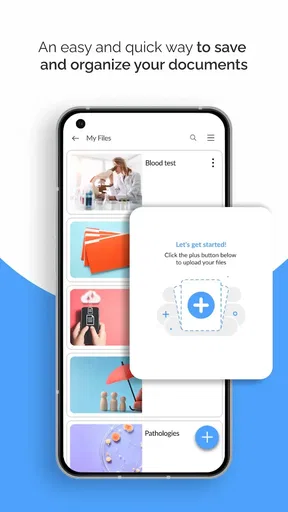
- Useful for tracking concerns and organizing information between appointments.
Cons
- It cannot replace an oncologist
- diagnosis
- or individualized medical advice.
- Responses may be incomplete or unsuitable for rare cancer situations.
- Users must be cautious when sharing sensitive health information.
- The quality of guidance depends on the details entered by the user.
- Emotional support may feel limited compared with a human counselor or support group.
FAQs for BelongAI Dave - Cancer Mentor
What is BelongAI Dave – Cancer Mentor, and who is it designed for?
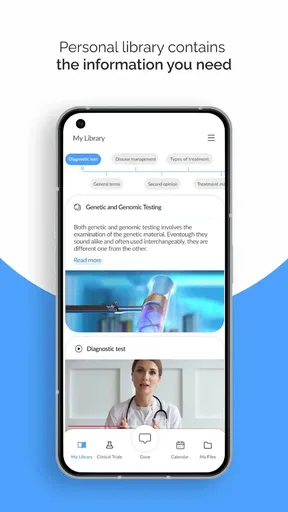
BelongAI Dave – Cancer Mentor is a cancer-support and information app designed to help patients, caregivers, and family members better understand the cancer journey. It can provide educational resources, practical guidance, emotional support, and tools for organizing questions or concerns. It should be viewed as a companion for navigating care, not as a replacement for an oncologist, nurse, or other qualified medical professional.
Can BelongAI Dave provide a cancer diagnosis or recommend treatment?
No. The app is not intended to diagnose cancer, interpret medical results as a final authority, or prescribe a personalized treatment plan. Its information and conversational guidance may help users prepare for appointments and understand general cancer-related topics, but every diagnosis and treatment decision must come from a licensed healthcare professional who knows the patient’s medical history, test results, medications, and individual circumstances.
Is the information in the app reliable and suitable for medical decisions?
BelongAI Dave can be useful for learning about cancer terminology, treatment experiences, supportive care, and questions to discuss with a medical team. However, health information can change and may not apply equally to every cancer type or patient. Before acting on anything you read or receive through the app, verify it with your oncologist or care team, particularly when it involves medication, side effects, clinical trials, diet, or urgent symptoms.
Can caregivers and family members use BelongAI Dave as well as patients?
Yes, the app may be helpful for caregivers and relatives who want to understand common cancer-related topics, prepare for conversations with clinicians, or find ways to support someone during treatment. Caregivers should still respect the patient’s privacy and preferences, especially when entering personal details or discussing medical information. The app should complement direct communication with the patient and healthcare team rather than replace it.
Is BelongAI Dave appropriate for emergencies or serious treatment side effects?
No. BelongAI Dave should not be used as an emergency service or as a substitute for immediate medical attention. If someone experiences severe breathing difficulty, chest pain, uncontrolled bleeding, confusion, loss of consciousness, or another potentially life-threatening symptom, contact local emergency services immediately. For concerning but non-emergency side effects, call the oncology team or the healthcare provider using the instructions supplied by the treatment center.


